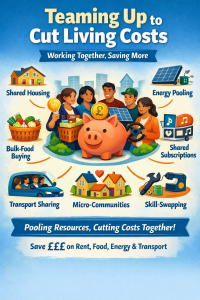
Living alone often costs significantly more than living as a couple, and many single adults are now teaming up with friends to buy property or share major expenses — a shift driven by affordability pressures and rising living costs.
💸 What the “singles tax” actually looks like
- Higher annual living costs — Single Britons pay up to £6,000–£8,000 more per year than couples due to covering rent, council tax, utilities, and groceries alone.
- Housing affordability gap — One in three UK households are now single‑occupancy, and solo buyers struggle most with deposits and mortgage affordability.
- Delayed independence — 69% of people say living alone is unaffordable, pushing the average age of house‑sharing up to 35.
🏠 Why more singles are buying homes with friends
BBC‑reported cases show that teaming up with a trusted friend can be a powerful workaround:
- Friends combine incomes → qualify for better mortgages.
- They split bills, maintenance, and household costs.
- They build equity faster than they could alone.
- Some later sell and buy separate homes once financially stable.
This is no longer fringe behaviour — it’s becoming a mainstream strategy for single professionals priced out of the market.
🔗 The rise of “matchmaking for mortgages”
Online platforms are emerging to connect singles who want to co‑buy property, essentially levelling the financial playing field by pairing people with similar goals and affordability constraints. This trend is directly tied to the singles‑tax pressure and the shift away from assuming home ownership must be done with a romantic partner.
🧠 A non‑obvious insight
The singles tax isn’t just about money — it’s about life trajectory. Singles often delay milestones (home ownership, savings growth, retirement planning) because every cost is multiplied by one. Co‑buying with friends is a way of reclaiming those milestones without waiting for a relationship to make them financially viable